
Welcome to SAP PP Module and key functions…
SAP PP MODULE AND KEY FUNCTIONS:
SAP PP module is a core component of SAP ERP systems, dedicated to managing and optimizing manufacturing and production processes.
It is a key part of the SAP system that holds important information like master data, settings, and transaction data needed to finish production plans. It creates a thorough plan to meet production targets and assists in recording and tracking all production and manufacturing activities.
A company that makes a product and sells it to customers has to carefully plan how to produce it and then actually make it.
SAP ERP Production Planning is super important for the company’s logistics to help with this. This part of the system allows the company to use past data to create a forecast plan that helps in both sales and production planning.
Starting from a basic sales plan or orders from customers, to the complicated and connected activities in logistics within the SAP ERP system, the PP component shows its power in both planning and execution.
Key functions:
1. Demand Management
2. Material Requirement Planning
3. Capacity Requirements Planning
4. Sales and Operations Planning
5. Long Term planning
6. Production Order Management
7. Cost Management
8. Integration with other modules like,
- SAP SD
- SAP MM
- SAP QM
- SAP FICO
- SAP PM
This integration ensures a smooth flow of information and coordination across different business processes.
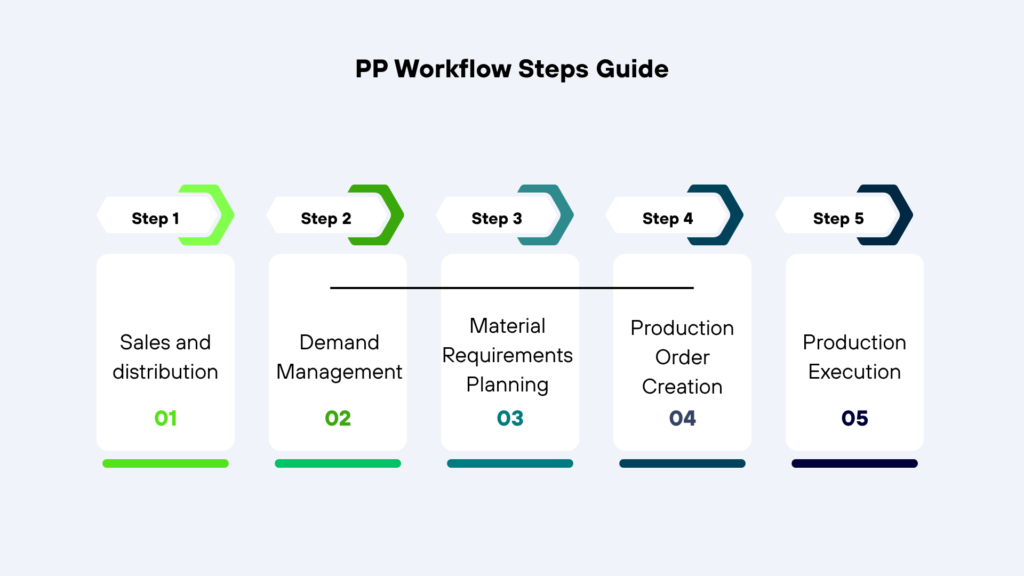
We will discuss major process in production planning and control for understanding purpose.
Demand Management:
SAP Demand Management helps match sales planning with what customers need based on the planning strategy, which allows for calculating the independent requirements for production.
The planning methods that SAP Demand Management focuses on include MTS, MTO planning with final assembly, and a few more.
Material Requirements Planning:
MRP is a really important part of PP. The system figures out how much of each component is needed while considering scrap and lot sizes. MRP works out the requirement coverage for all levels like plant, material, product group, and MRP areas, and it also looks at lead times, lot sizes, and scrap amounts.
The net requirement calculation,
Available stock = In house stock qty – safety stock qty + open order qty – requirement qty.
Open order qty = purchase orders, production orders, fixed procurement proposals
Requirement qty = PIRs, customer requirements, material reservations, forecast requirements for unplanned additional requirements.
Based on this calculation if the available stock is negative means,
For raw material = system generates purchase requisition for the shortage quantity.
For In house production = system generates planned orders for the shortage quantity.
“For more discussions on this topic, visit the SAP Community.”
Capacity Requirements Planning:
To plan production in detail while considering the available resources, capacity requirements planning organizes the job card carefully. This job card usually includes the steps for production orders that have been created or released. Capacity requirements planning provides a production order that is realistic based on the available capacity. It involves checking the capacity and balancing it out.
Capacity evaluation shows how much load and overload there is at work centers, while capacity leveling assists the planner in making the production process better.
Sales and Operations Planning:
Sales and operations planning helps figure out how much to produce. It’s also called demand planning and looks at future needs without thinking about current stock or how much can be made. We use past sales numbers to help with sales planning.
Then, operations planning takes what we learned from sales planning to decide how much to make, while also considering what we already have in stock and how much we can produce.
Long Term planning:
This is a tool that simulates material requirements planning. It looks at how changes in planned independent requirements can impact capacity use, inventory levels, and outside purchasing.
In this topic SAP PP module and key functions clearly explained the concepts and we can learn easily and progress further.
“Hope this post SAP PP module and key functions helped you”